


Data analysis outsourcing in South Africa has become a strategic advantage for international businesses seeking high-quality insights without the cost and rigidity of traditional in-house analytics teams. South Africa’s rise as a global data analysis outsourcing hub offers significant advantages for international organizations looking to scale their analytical capabilities.
By leveraging data analysis outsourcing in South Africa, companies gain access to a strong pool of skilled analysts while benefiting from reduced operational costs. This strategic approach enables scalable, insight-driven decision-making that improves efficiency, strengthens competitiveness, and supports long-term growth. As a result, South Africa has positioned itself as a key player in the global data analytics landscape.
Businesses in the United States, Australia, New Zealand, and Europe now generate more data than ever before. Operational systems, financial platforms, and customer tools continuously produce information, yet many organizations struggle to turn this data into meaningful insight. Skilled analysts are expensive, reporting demands continue to grow, and leadership teams expect faster and more reliable answers.
These challenges have led many organizations to rethink their analytics models. Increasingly, they are turning to South Africa data analytics outsourcing as a smarter, more flexible way to access offshore data analysis teams that can support reporting, business intelligence, and strategic decision-making at scale.
The Challenge of Turning Data Into Useful Insight
Businesses face data challenges at every stage of growth.
Small and mid-sized organizations often struggle to access experienced data analysts and BI specialists. These roles command high salaries, and internal teams usually focus on day-to-day operations rather than deeper analysis. Reporting often becomes reactive instead of strategic.
Larger organizations face a different challenge. As data volumes increase, analysis becomes harder to manage. Multiple systems, regions, and datasets add complexity. Teams spend more time preparing data than analyzing it. This slows decision-making and reduces confidence in insights.
Common challenges include:
- High costs for experienced data analysts and BI specialists
- Slow and manual reporting processes
- Inconsistent or unreliable data outputs
- Limited visibility into trends, risks, and performance
- Difficulty scaling analytics as the business grows
These challenges make it difficult for businesses to use data effectively. Without the right structure and expertise, data becomes a burden instead of an asset. This creates a strong case for a scalable and flexible data analysis model.
These challenges create a strong case for a scalable and flexible data analysis model.
A Smarter Way to Outsource Data Analysis
Data analysis outsourcing works best when businesses treat it as a strategic capability rather than a short-term fix.
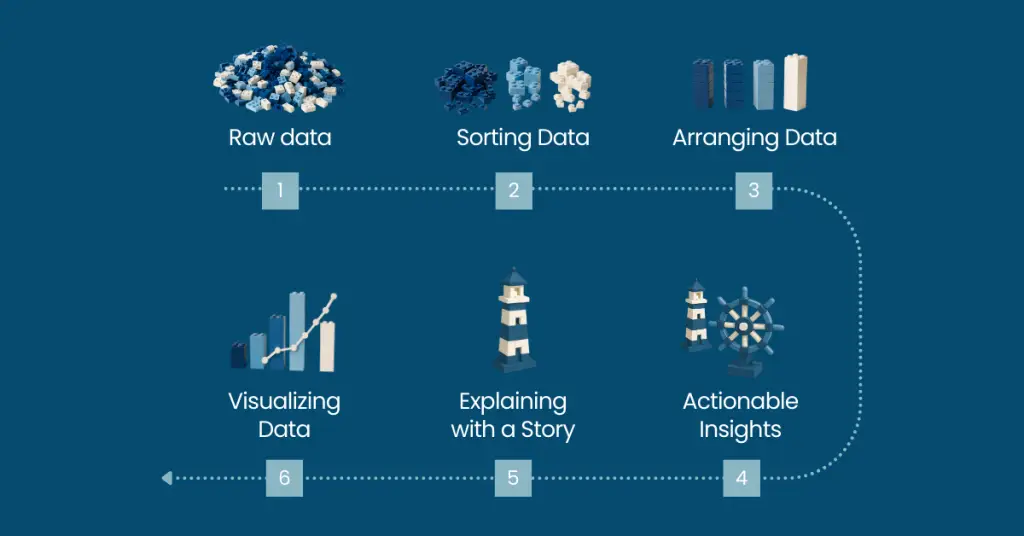
The first step is identifying insight gaps. These gaps often exist in reporting, dashboards, forecasting, performance tracking, or ad hoc analysis. Understanding where decisions lack data support helps define the scope of outsourcing.
Next, businesses should define clear outputs. Many organizations begin with specific deliverables such as dashboards, recurring reports, or financial reconciliations. These deliverables create immediate value and build trust. Over time, companies expand into deeper analysis, forecasting, and trend modeling.
Finally, it is critical to choose a partner that integrates well with the business. The right analytics team works within existing systems and tools. They understand the business context and support decision-making across teams. This allows the outsourced team to function as an extension of the organization rather than a separate vendor.
This approach gives businesses access to high-quality analysis while maintaining flexibility, control, and data security.
How Organizations Are Using South African Analytics Teams
Many organizations already rely on South African analytics teams to support better decision-making.
Mid-sized businesses often outsource data analysis to improve efficiency and accuracy. These organizations typically want reliable reporting without increasing headcount. By outsourcing analytics, they gain access to skilled professionals who can build dashboards, automate reports, and provide consistent insights.
Common goals for mid-sized businesses include:
- Improving reporting accuracy and consistency
- Accessing analytics expertise without increasing headcount
- Helping leadership teams make faster, data-driven decisions
Larger organizations use the same model for different reasons. They often need to scale analytics across departments or regions. Internal teams struggle to keep up with growing demand. Outsourcing helps reduce backlogs while maintaining quality and governance.
Larger organizations often focus on:
- Scaling analytics across teams and regions
- Standardizing dashboards and reporting
- Reducing reporting backlogs while maintaining quality
At Magnum Opus Consultants, we build dedicated analytics teams for each client. These teams align with client systems, data sources, and business goals. This ensures reliable insight at any scale and supports long-term decision-making.
Best Practices for Successful Analytics Outsourcing
Businesses can increase the value of outsourced data analysis by following a few best practices.
First, focus on decision support. Clearly define which decisions the analysis must support. This keeps reporting relevant and prevents unnecessary complexity.
Second, maintain strong governance. Clear KPIs, shared definitions, and proper documentation build trust in insights. Governance also ensures consistency across teams and regions.
Third, plan for growth. Select a partner that can move from basic reporting to advanced analysis as data needs evolve. This ensures the analytics function grows with the business instead of becoming a bottleneck.
When businesses follow these practices, outsourced analytics becomes a long-term strategic asset.
Common Mistakes to Avoid
Many organizations make similar mistakes when outsourcing data analysis.
A common issue is treating analytics as a reporting task rather than a strategic function. This limits the value of insights and keeps teams reactive.
Another mistake is outsourcing analysis without enough business context. Analysts need to understand how the business operates to deliver meaningful insights.
Some organizations also exclude analysts from decision-making processes. This reduces impact and slows adoption.
Common issues include:
- Treating analytics as a reporting task instead of a strategic function
- Outsourcing analysis without enough business context
- Excluding analysts from decision-making processes
Businesses avoid these mistakes by choosing partners who understand both data and business operations.
Why South Africa is a Leading Analytics Outsourcing Partner
Outsourcing data analysis to South Africa delivers far more than cost savings. It provides businesses with scalable insight, faster decision-making, and access to experienced offshore data analysis teams that integrate seamlessly with internal operations.
South Africa offers a rare combination of analytical expertise, global compliance alignment, strong communication skills, and cost efficiency. This makes it an ideal analytics outsourcing partner for both growing businesses and large enterprises.
Magnum Opus Consultants builds dedicated analytics teams focused on accuracy, clarity, and decision support. Our approach ensures that outsourced BI and reporting functions strengthen your organization rather than operate in isolation.
If you are looking to improve reporting, build dashboards, or gain deeper insight from your data, our data analysis outsourcing services in South Africa can support your next stage of growth.
👉 Get in touch to explore how we can help.
If you found this article useful, share it with colleagues or peers exploring better ways to manage and scale their data operations.


